
The Moment
It is the 21st of the month. Riya opens her bank app to pay a friend back for dinner, and stops.

The balance is lower than she expected. Not dramatically lower. Just lower in that quiet, confusing way where you think, “But I didn’t buy anything.”
She hasn’t. No new phone, no trip, no sale-season madness. So she scrolls through her payment history, and there it is. ₹60 for chai. ₹149 for a delivery fee. ₹99 for an app she forgot she was paying for. ₹240 for a cab because it was raining. ₹35. ₹180. ₹60 again. ₹420 for “just a few things” at the grocery store near her office.
Not one of these felt like spending when it happened. Each one felt like nothing.

Riya is not a real person. She is a mix of a moment most of us have had — the moment we realise that the money didn’t go on anything big. It went on lots of things that were too small to notice.
I call this the ₹500 leak. The ₹500 is my own simple shorthand, not a number from research: the leak is the small spending that feels too minor to notice, and so it rarely gets counted.
What’s Going On
When we make a big purchase, we give it attention. We compare prices. We sleep on it. We may even ask someone at home. Think of this as an illustration, not a measurement: a ₹40,000 phone might get days of thought.
A ₹180 coffee might get a few seconds.

That is not a character flaw. It is a reasonable shortcut. Nobody has the energy to think hard about every chai. The problem is not that small spends exist, or even that they add up. The problem is that they sit below a line in our heads, a line that quietly says “this doesn’t count”.
And what doesn’t count doesn’t get seen.

Here is a simple illustration, using made-up numbers: a ₹180 coffee on 22 working days is ₹3,960 a month. Over a year, that is ₹47,520. Most of us would think very carefully before spending ₹47,520 in one go. Spread across the year in ₹180 pieces, it may never cross our mind at all.
To be clear, coffee is not the villain here. If that coffee is the best ten minutes of your workday, it may be worth every rupee. The point is not to stop small spends. It is to see them, so that the ones you keep are the ones you actually chose.
One more thing about that “doesn’t count” line: it isn’t the same for everyone. It can move as our income, routines and expectations change. A purchase that once felt significant can become almost invisible later. That is one way spending can grow without any single purchase feeling dramatic.
What’s Behind It
Three ideas from behaviour research help explain why small spends slip through. I’ll keep them simple.
We keep money in mental jars. The economist Richard Thaler described something he called “mental accounting”: we don’t treat all money the same. We sort it, in our heads, into separate accounts — rent money, salary money, bonus money.

Here is my own way of picturing how that plays out with small spends: we seem to keep a “small change” jar, and money in it feels lighter and easier to let go of, even though a rupee is a rupee wherever it sits.
Small amounts feel trivial — even when the total isn’t. The researcher John Gourville studied what happens when a cost is described as a small daily amount (“just a few rupees a day”) instead of one bigger total. People found the same cost easier to accept when it was framed as small daily pieces. He studied how prices are presented, not everyday chai — applying it here is my extension of his idea. But our small spends do something similar by themselves: each one arrives already cut into a size that feels like nothing.
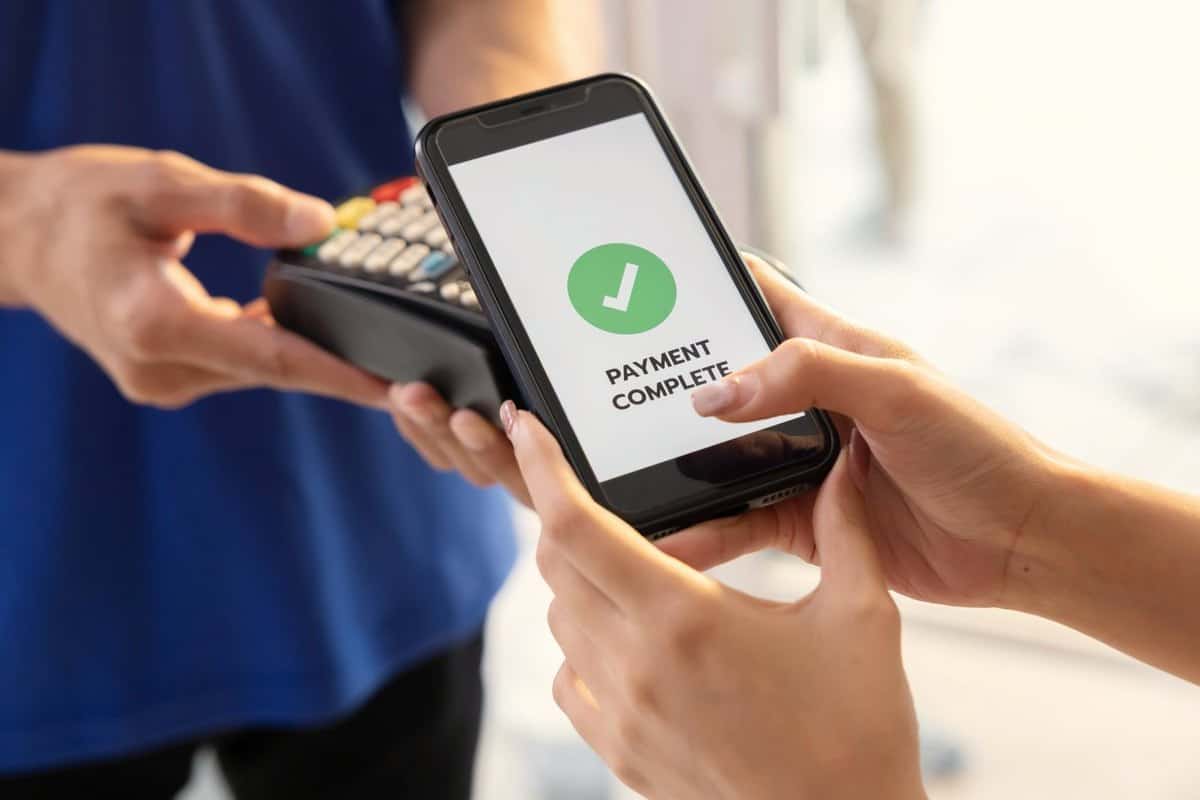
The less we feel a payment, the easier it is to repeat. The researchers Drazen Prelec and George Loewenstein wrote about the “pain of paying”: the small sting we feel when money leaves us. Dilip Soman later found that how we pay changes how well we remember a payment: payments that make us notice the money (like writing out a cheque) were remembered more clearly than ones that didn’t, and they had more influence on what people chose to spend next. When a payment is poorly remembered, it may be less likely to slow down the next one.
These studies were done before today’s one-tap phone payments, and outside India, so they cannot tell us what UPI does specifically. Later research has started looking at how visible our digital payments are, but that is a different question. For this article, the useful question is simpler: when paying becomes almost effortless, do we notice the payment less? In my experience of talking to friends about money, almost everyone has their own version of Riya’s 21st-of-the-month moment.
Small spends are often not a money problem. They are a noticing problem.
One Habit

The evening tally.
Every night for the next seven days, before you go to sleep, open your payment history and add up that day’s payments under ₹500. Write just one number in the notes app on your phone:
Monday — ₹640.

Your one habit this week
Every night for 7 days: add up that day’s payments under ₹500 and write one number in your phone notes. No cutting, no judging — just the number.
That’s it. You don’t cut anything. You don’t make a budget. You don’t judge yourself. You only write the number.
Why this might help: it moves small spends out of the “doesn’t count” jar and into a place where you can see them. A 2020 field study followed more than 1,000 credit-card users for several months and found that making their transactions more visible on their phones helped them spend less. The evening tally is my simple, do-it-yourself way of applying that idea — it has not been tested as an exact method. It takes about a minute a day. And it doesn’t ask you to become a different person — only to notice what the person you already are is doing.
If a minute feels like too much, do the ten-second version: before you tap Pay on anything under ₹500, say the amount to yourself in your head. “Two hundred and forty.” That tiny pause can be enough to turn “nothing” back into a real choice.
Why not just make a budget? You can, later. But a budget asks you to predict and restrict your spending before you have really seen it. For many of us, that is like trying to diet without ever looking at what’s on the plate. The evening tally comes first because it is so much easier: it only asks you to look. Once you can see your small spends clearly, deciding what to do about them — if anything — becomes a far calmer conversation with yourself. (A future article will look at why budgets so often fail, and what a monthly money review does instead.)
Your 7-Day Check
At the end of the week, look at your seven numbers and ask yourself three questions:
- What was the week’s total? Were you closer to what you guessed, or further away?
- Which small spend surprised you most? Not the biggest — the most surprising.
- Which ones would you happily repeat? Keep those, guilt-free. They are choices now, not leaks.
You may find that nothing needs to change. You may find one leak you’d rather close. Either way, you will know something about your own money that you didn’t know a week ago — and that knowledge is the whole point.
A word on guilt: if a number makes you wince, that’s fine. Wincing is noticing. But this is not an exam and nobody is marking it. The small spends were never the enemy. Not seeing them was. And after this week, you will have seen them.
If you try it, I’d love to hear which small spend surprised you most. Tell me in the comments — no amounts needed.
More from Mind Money Life: browse all articles, or read how I choose and check sources in the editorial standards.
Sources & further reading
- Richard Thaler, “Mental Accounting and Consumer Choice”, Marketing Science, vol. 4, no. 3, 1985, pp. 199–214.
- John T. Gourville, “Pennies-a-Day: The Effect of Temporal Reframing on Transaction Evaluation”, Journal of Consumer Research, vol. 24, no. 4, 1998, pp. 395–408.
- Drazen Prelec and George Loewenstein, “The Red and the Black: Mental Accounting of Savings and Debt”, Marketing Science, vol. 17, no. 1, 1998, pp. 4–28.
- Dilip Soman, “Effects of Payment Mechanism on Spending Behavior: The Role of Rehearsal and Immediacy of Payments”, Journal of Consumer Research, vol. 27, no. 4, 2001, pp. 460–474.
- Johannes Huebner, Elgar Fleisch and Alexander Ilic, “Assisting mental accounting using smartphones: Increasing the salience of credit card transactions helps consumer reduce their spending”, Computers in Human Behavior, vol. 113, 2020, article 106504.
The example amounts in this article (₹180, 22 days, ₹3,960, ₹47,520 and Riya’s payments) are illustrations, not data.
This article is for education only. It is not financial advice and is not written for your personal situation.

Leave a Reply